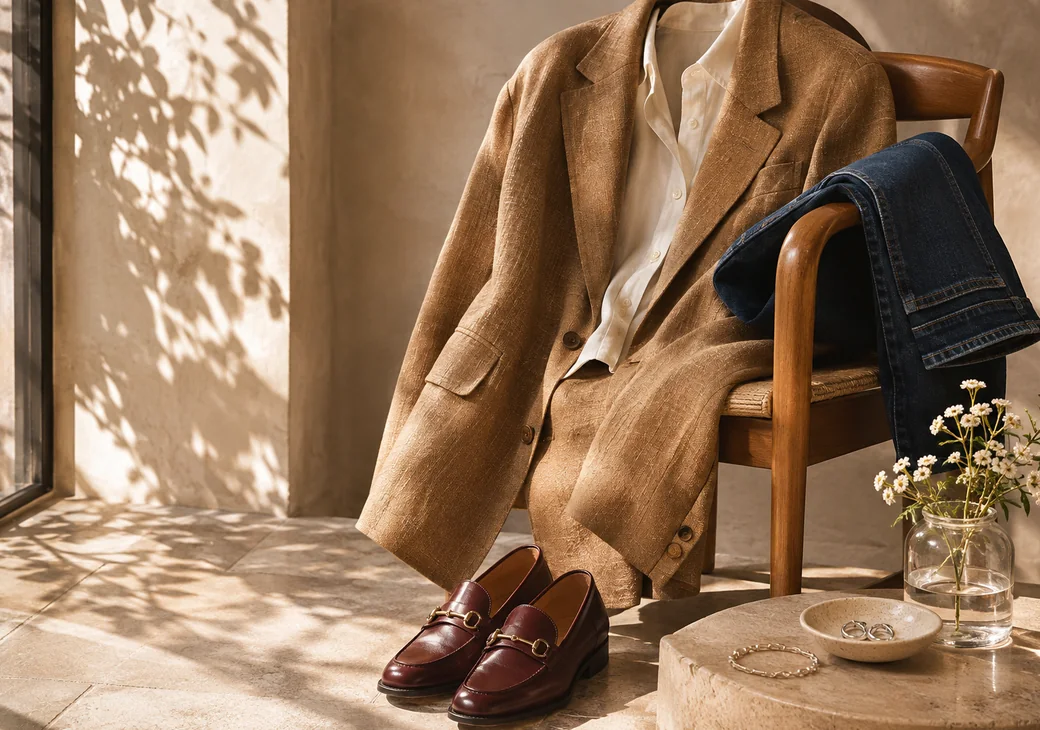
Open most wardrobes and you'll find a mix of reliable favourites, almost-right pieces and things saved for a version of life that rarely happens. A useful wardrobe edit isn't about reducing everything to a prescribed number. It's about making the parts you love easier to find, combine and care for. Here is a practical approach that starts with your actual week.
Begin with the week you actually live
Think about where you go in an ordinary seven days. You may need four comfortable work outfits, casual weekend clothes and one option for an occasional event. Your neighbour's beautiful capsule wardrobe might not suit school pick-up, a busy retail job or humid Queensland weather. Write down the activities you dress for most often, then look at how your existing clothes meet those needs. This little audit prevents a shopping list from becoming a fantasy wardrobe.
Find three pieces you reach for
Pull out a top, a bottom and an extra layer you frequently wear. What makes each one useful: shape, colour, fabric, fit, pockets or ease of washing? Look for those qualities elsewhere in the wardrobe. You are not trying to make every outfit identical. You're learning what already works, so that new combinations feel familiar. It can help to photograph an outfit that feels comfortable before putting it away.
Build a few reliable combinations
Lay out two or three outfits from clothes you own. A relaxed shirt with tailored trousers, a simple top with jeans and a cardigan, or a dress with flat shoes might cover much of your week. Consider whether each outfit has the shoes, layers and underwear it needs. If a look requires a missing specialist item to be wearable, set it aside rather than immediately buying one.
Separate repairs from shopping
A missing button or trousers that need hemming can make a perfectly good garment disappear from regular use. Create a small repair pile and decide which fixes are worth the time or cost. Keep genuinely sentimental pieces separately if you want, so they don't crowd the clothes you dress in daily. Donate, sell or responsibly recycle items you no longer want, in line with their condition and local options.
Add only what fills a real gap
After wearing your refreshed combinations for a week or two, notice any recurring problem. Perhaps you need a lightweight layer for cool mornings or a pair of shoes suitable for your commute. Look for something that works with several things you already own. Try it on, check care needs and consider your budget before buying. A well-used wardrobe is a better goal than an instantly complete one.
A useful way to test your edit
Pick an ordinary Tuesday and assemble the outfit the night before using only what you already own. Add the shoes and extra layer, then check whether it works for your commute, work or errands. Wear it through the day and make a note of any problem you actually experienced. Did the trousers crease uncomfortably? Was the shirt hard to care for? Did the bag need better pockets? Those observations make a future purchase specific rather than aspirational. Repeat with another outfit before declaring a wardrobe gap.
Our articles share general styling and lifestyle information, not personalised medical or professional advice. Learn how we work.